My name is Madison Douglas and I am an assistant professor in Earth and Planetary Science at the University of California, Berkeley. I am interested in how landscapes form and how biological, chemical, and physical processes alter landscapes through time. This academic discipline is called geomorphology. My current research focuses on river systems, which are important links between the continents and in Earth’s oceans. Rivers are also very important resources for people all around the world, providing food, transportation, and recreation. River also pose hazards from flooding and erosion, threatening communities and vital infrastructure. I seek to understand the processes that shape rivers and other landscape features so that we can accurately predict the effects of climate change and better engineer and conserve landscapes for societal benefit.

Permafrost landscape mechanics
Ground frozen for at least 2 years (permafrost) underlies much of the modern Arctic. However, permafrost is rapidly thawing as the climate warms, causing significant changes to Arctic landscapes. We currently lack a mechanistic understanding of how the presence of permafrost influences landforms such as hillslopes and rivers, so we cannot accurately predict how they will respond to permafrost thaw. This poses an incredible challenge to the people living in and making policy for permafrost regions, and disproportionately affects Alaska Native communities and other Indigenous residents of the Arctic.
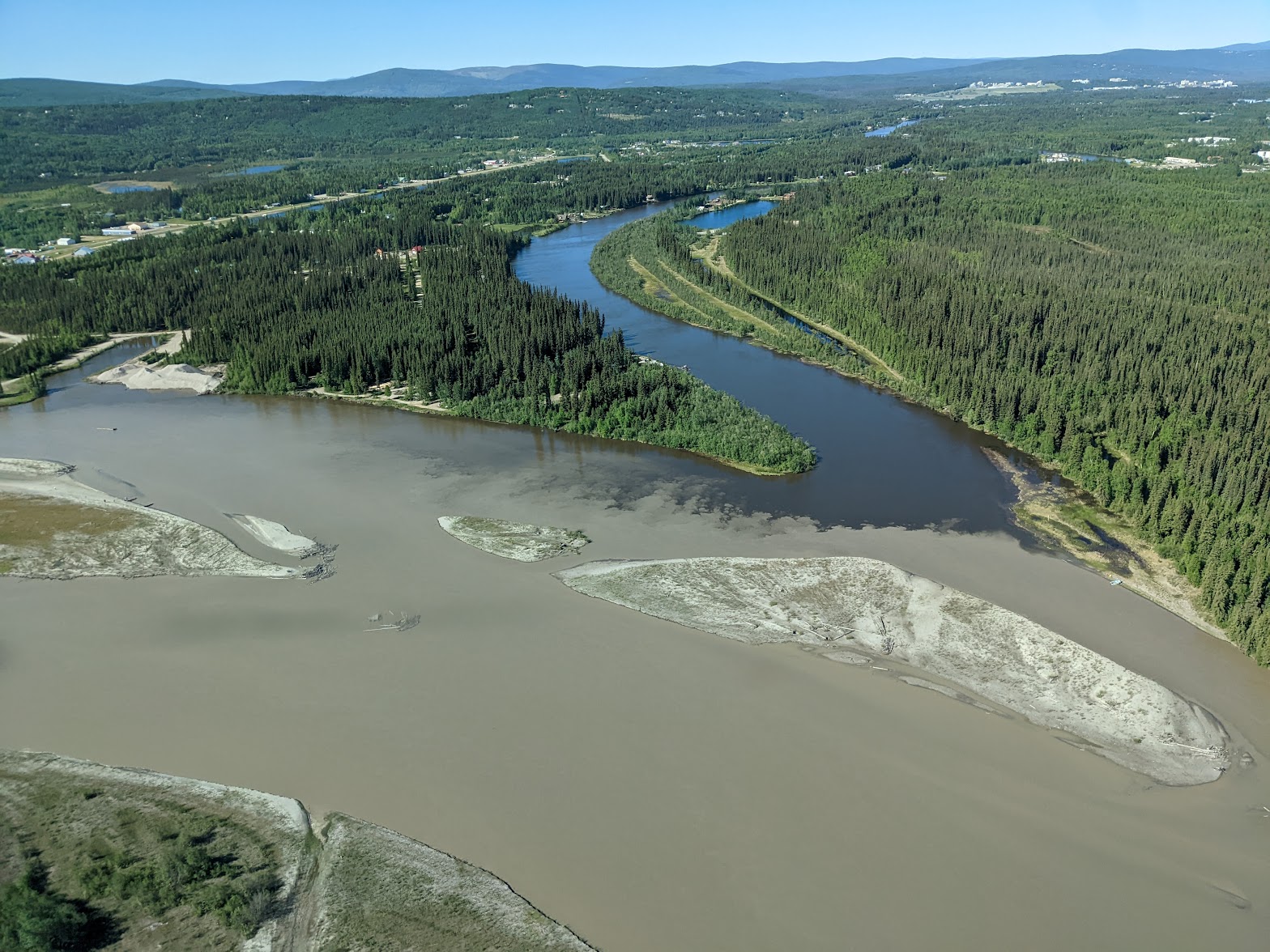
My doctoral work focused primarily on permafrost riverbank erosion, which already poses a threat to many houses and pipelines in Alaska, and is hypothesized to increase in coming decades. My lab group is conducting frozen flume experiments on ice-covered rivers and studying rapidly eroding permafrost gullies near Kotzebue, Alaska.
Influence of landscape dynamics on carbon cycling
The thin layer along the Earth’s surface that supports life and drives biogeochemical cycles is sometimes called the “critical zone.” Understanding how carbon and the plants and microbial communities that govern carbon fluxes are distributed across landscapes requires collaboration between geomorphologists and other experts in chemistry, ecology, and microbiology. These interdisciplinary studies are particularly important for understanding the fate of currently stored in permafrost that may be converted to greenhouse gases as the Arctic thaws.
I collaborate with chemists and biologists to characterize organic carbon fluxes in permafrost environments. This work includes taking samples of water and sediment to understand where carbon is present, how much, and how old it is. In addition, I have worked with microbiologists to understand how landscape structure shapes microbial communities and what unique microbes live in permafrost.

The effects of vegetation on landscape evolution
Plants are known to provide a significant source of strength and cohesion to soils on hillslopes and riverbanks, but they have only been present for less than 20% of Earth’s history. What did landscapes look like before there were land plants?
To address this question, I have conducted multi-year monitoring along the Amargosa River in Death Valley National Park. This reach of the Amargosa lacks plants, and its banks are instead held together by salt crusts and mud. The river also rarely flows, yet it has a surprisingly similar form to other modern rivers with vegetation and perennial water flow. I have also worked to improve analytical approaches and resistive force theory to model root reinforcement at the scale of individual plants and root branches.